Here is the thing about your sewer line. It is buried deep underground, and you never think about it until you have a problem, and it is always at the worst possible time. A weekend, a holiday, the night before company shows up. Trust me, I am the one who gets the call to fix it.
The good part is that a sewer line almost always warns you before it quits. So let me give you a few things to watch for, and a couple of things to do, that will save you a lot of money down the road.
Get a Camera Down It Every Few Years
 This is the one almost nobody does, and it is the cheapest insurance there is. A camera inspection is way cheaper than you think. The trouble is most people only get one when they are buying a house or selling one, and that is exactly when we find the problems, after it is already a mess.
Get a camera down your line every five years or so, and sooner if your home is over 50 years old. I will tell you why I push this so hard. I am doing a sewer liner right now for a woman who just bought her house. She does not have the money, and it is a $20,000 repair. It breaks my heart, because a camera down that line before she closed would have cost about $350 and she would have known. People spend money on what they can see, the bathrooms and the fixtures. It is the stuff you cannot see that turns into the giant surprise.
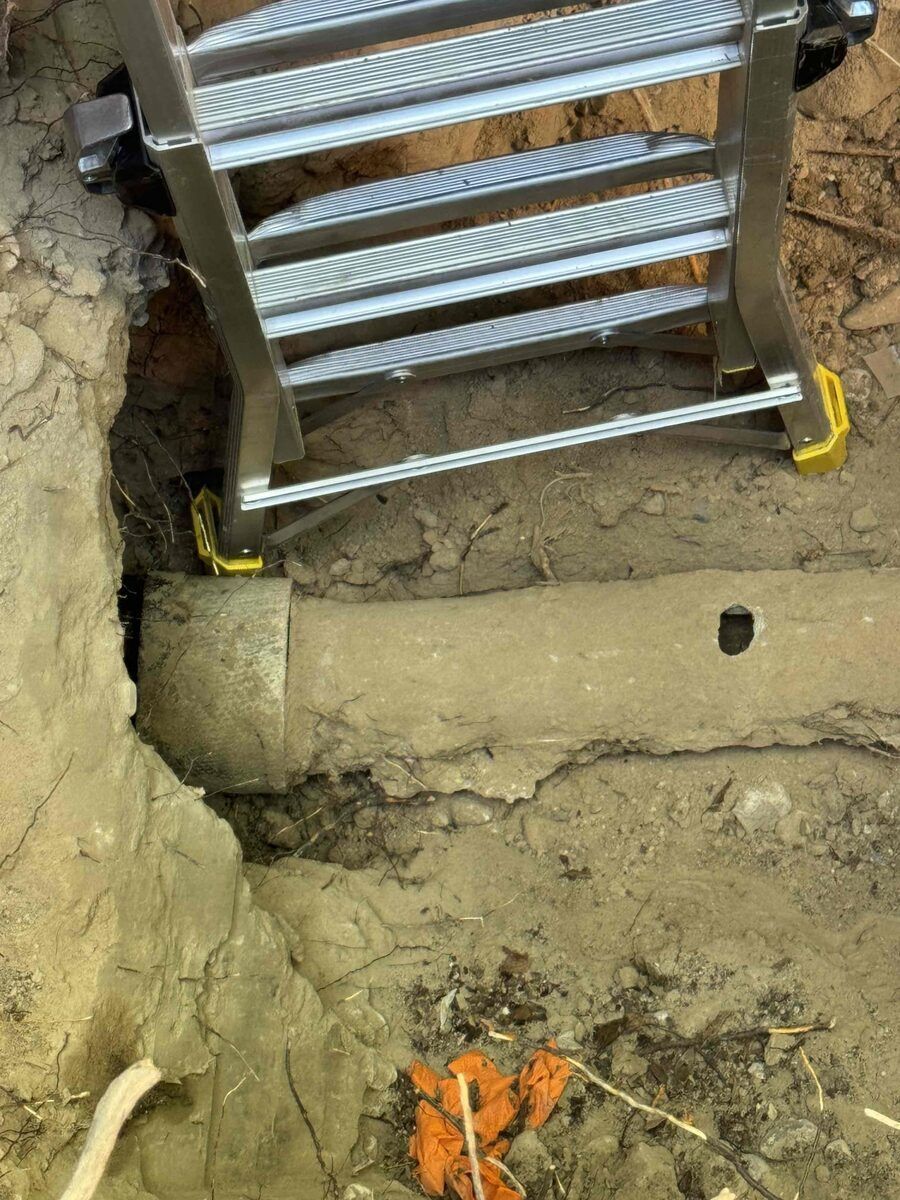
There is one more reason the camera matters in our older Utah homes. If your place was built back in the 1940s, you might have Orangeburg pipe in the ground. During World War II there was a metal shortage, so they made sewer pipe out of what is basically rolled-up tar paper. Run a snake down an Orangeburg line and it will tear it up and destroy it. You want to know what you have before anybody sticks a tool in there.
Watch the Sink Stack in Your Laundry Room
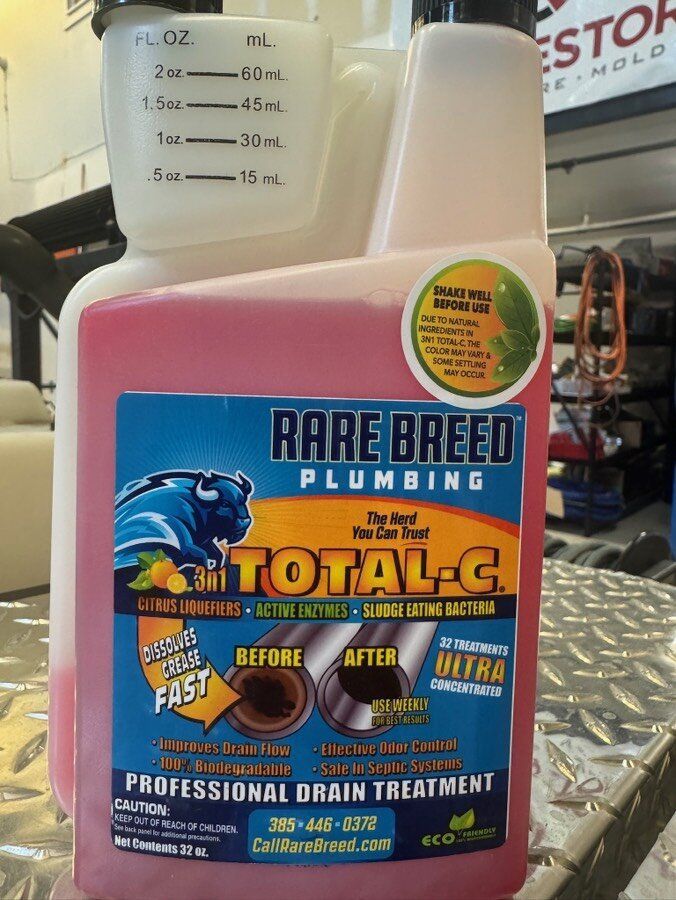 Here is a little one that catches people. If you have got a laundry sink sitting right above your kitchen sink on the same stack, all the grease and fat from the kitchen tends to congeal with the soaps from the laundry, and you are a lot more likely to clog right there. Stay ahead of it. Use an enzyme cleaner, not an acid. We run Total-C. It eats the gunk without eating your pipe.
Learn the Warning Signs
Your line gives you tells. Here is what I would watch for.
One slow drain is usually just that one drain, and a plunger or a snake handles it. But when your kitchen sink, your bathroom sinks, and the tub all drain slow on the same day, that is not any one drain. That is your main line, where everything meets, and a partial blockage has a way of becoming a complete one.
Listen for gurgling, too. If you flush a toilet and hear a drain gurgle in another room, or the toilet bowl drains itself down for no reason, that is air getting pushed around a soft clog further down the line. Get it handled before it backs up on you.
And you will know it is a real backup when water shows up where it has no business being. You run the shower and it comes up through the tub, or the floor drain, or the lowest fixture in the house, because the lowest fixtures sit closest to the main line. When running one thing pushes water or air out of another, the blockage is downstream of both. Do not fight that with a plunger or a bottle of drain cleaner. That one is for the right equipment.
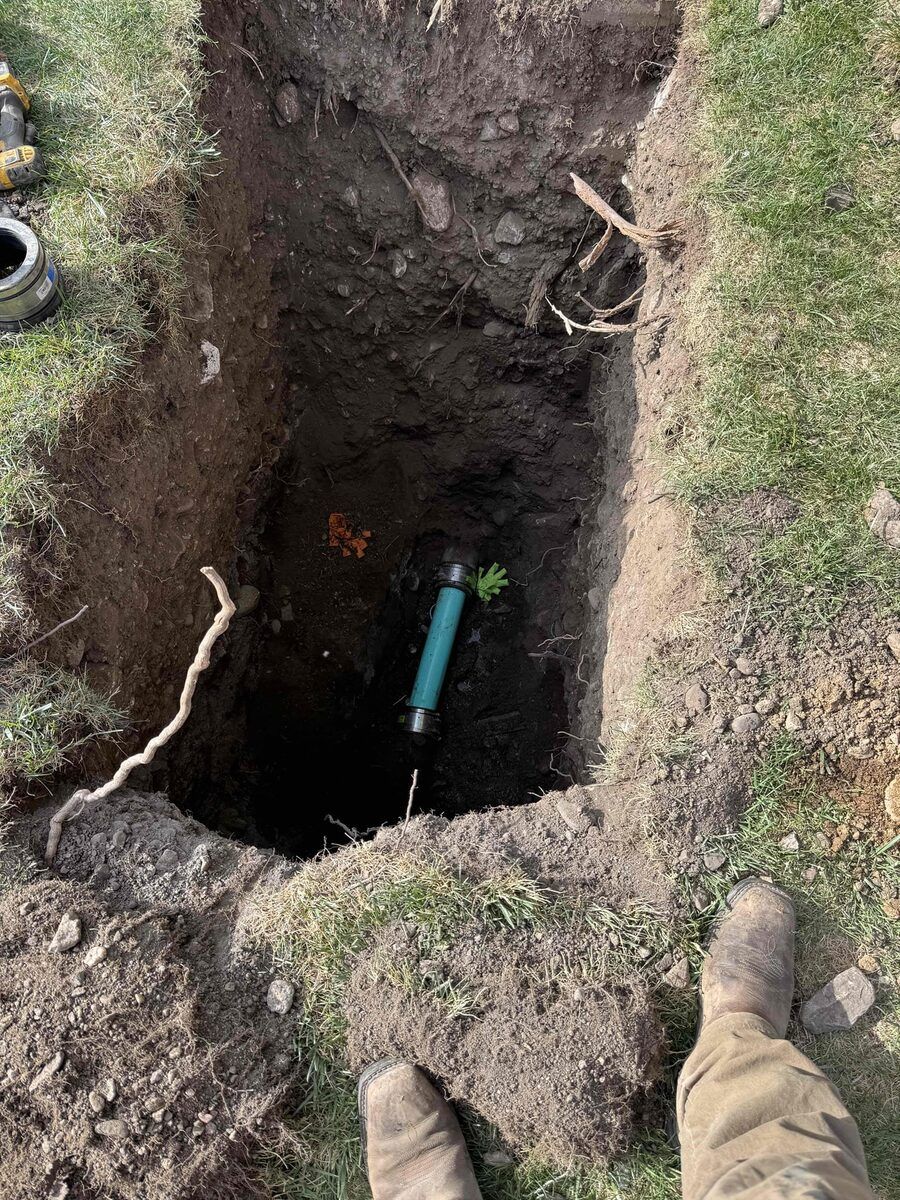 One sign you can skip is the old "look for a green, soggy patch in your yard" advice you read online. Out here it does not hold up. Our sewer lines are buried around eight feet down to stay below the frost line, so a leak rarely shows on the surface the way it does in warmer places. Do not wait for your lawn to tell you. The reliable signals are inside the house, and the real answer is a camera.
What We Actually Do
When you call us, the first tool down the hole is a camera, a flexible cable with a lens on the end that lets us see the inside of your line in real time. It takes the guessing out. We can see whether it is grease, roots, a crack, a belly where the pipe sagged, or a full blockage, and exactly where it sits. From there a hydro-jet can clear a clog, roots get cut and treated, and a bad section can get lined without digging up your yard, or replaced if it is too far gone.
Here is the other side of that, and it is the reason I push the camera so hard. There are companies that will quote a homeowner an $18,000, $25,000, even $40,000 liner they flat out do not need. When our camera goes down and you do not need it, we tell you straight: you do not need this. We will bid it if that is the route you want, but you are not getting talked into a repair you do not have. A $350 inspection that tells you the truth beats a $20,000 repair you walked into blind, and it sure beats one you never needed.
Sewer problems almost never blow up out of nowhere. They build, and they give you chances to catch them early, when the fix is cheaper and a lot less disruptive than after a full backup or a yard dig.
At Rare Breed we handle sewer line diagnosis and repair all over Northern Utah and Salt Lake and Utah County. If you are seeing any of this, call 385-449-0144 or schedule an inspection, and we will tell you what is down there and what it takes to fix it.
Frequently Asked Questions
How often should I get a sewer camera inspection?
Every five years or so, and sooner if your home is over 50 years old. Most people only get one when they are buying or selling a house, and that is exactly when we find the problems, after it is already a mess. An inspection runs about $350, and it beats a $20,000 surprise you walked into blind.
What are the warning signs of a sewer line problem?
One slow drain is usually just that drain. But when the kitchen sink, the bathroom sinks, and the tub all drain slow on the same day, that is your main line. Gurgling from another room when you flush, a toilet bowl that drains itself down for no reason, or water coming up through the tub or floor drain when something else is running all mean the blockage is downstream in the main.
What is Orangeburg pipe and why does it matter?
If your home was built back in the 1940s, you might have Orangeburg in the ground. During World War II there was a metal shortage, so sewer pipe was made from what is basically rolled-up tar paper. Run a snake down an Orangeburg line and it will tear it up and destroy it. Get a camera down first so you know what you have before anybody sticks a tool in there.
Does a green, soggy patch in the yard mean a broken sewer line?
Not out here. Utah sewer lines are buried around eight feet down to stay below the frost line, so a leak rarely shows on the surface the way it does in warmer places. The reliable signals are inside the house, and the real answer is a camera.
Do I really need the sewer liner I was quoted?
Not until a camera says so. There are companies that will quote an $18,000, $25,000, even $40,000 liner a homeowner flat out does not need. When our camera goes down and you do not need it, we tell you straight. A $350 inspection that tells you the truth beats a repair you never needed.