Most water heaters don't fail without warning. They give you signals for weeks or months before the day you walk into a garage full of water or step into a cold shower. The problem is that most homeowners don't know what to look for, so the warning signs get written off as quirks until it's too late.
This is especially true here. Utah has the hardest water per capita in the nation, and that hard water accelerates water heater wear in ways that aren't always obvious from the outside. A heater that looks fine from across the room might already be working twice as hard as it should because of the scale building up inside it.
Here's what to watch for.
Your Water Heater Is More Than 10 Years Old
Age isn't a symptom on its own, but it's the most important piece of context for everything else on this list. Most traditional tank water heaters last 8 to 12 years. In Utah, where hard water deposits mineral scale inside the tank year after year, that range skews toward the shorter end without regular maintenance.
If your heater is 10 years old or older, any of the signs below are serious. If it's under 8 years old and you're seeing problems, you likely have a repair on your hands rather than a replacement, but you still want a plumber to look at it.
You can find the age of your water heater by looking at the serial number on the label near the top of the tank. Most manufacturers encode the manufacture date in the first few characters. A quick search for your brand's serial number format will tell you exactly how to read it.
You're Running Out of Hot Water Faster Than You Used To
A water heater that used to power two showers and a load of laundry now struggles to get through a single shower. The recovery time between uses has stretched out noticeably.
This is one of the most common signs of a heater that's losing ground, and in Utah, the likely cause is sediment. As hard water minerals settle out of the water and onto the bottom of your tank, they take up space that used to hold water. Less water capacity means less hot water available per cycle. The sediment also insulates the heating element from the water above it, slowing the heating process.
In some cases this problem can be addressed by flushing the tank to remove sediment buildup. In others, the scale is too heavy and the tank has reached the end of its useful life. Either way, it's worth a call to a plumber to get an honest assessment.
You Hear Rumbling, Popping, or Banging
A quiet water heater is a healthy one. If yours has developed a rumbling sound, a series of pops, or periodic banging when it fires up, that's sediment talking.
As mineral deposits harden on the bottom of the tank and around the heating element, they get trapped under the water above them. When the burner heats the tank, water percolating up through those deposits creates the rumbling and popping sounds. The banging happens when steam pockets form under the scale and release suddenly.
People are always shocked by how much builds up in there. The most-watched video I have ever posted is a foot of sediment we pulled out of one tank, and it came down to hard water and no softener. If your tank is making noise, that is the same sediment talking, just earlier in the story.
These sounds mean your heater is working significantly harder than it should. The efficiency hit shows up on your utility bill. The mechanical stress accelerates the wear on the tank. A heater that's loud has months, not years, of life left in most cases.
You See Rusty or Discolored Water
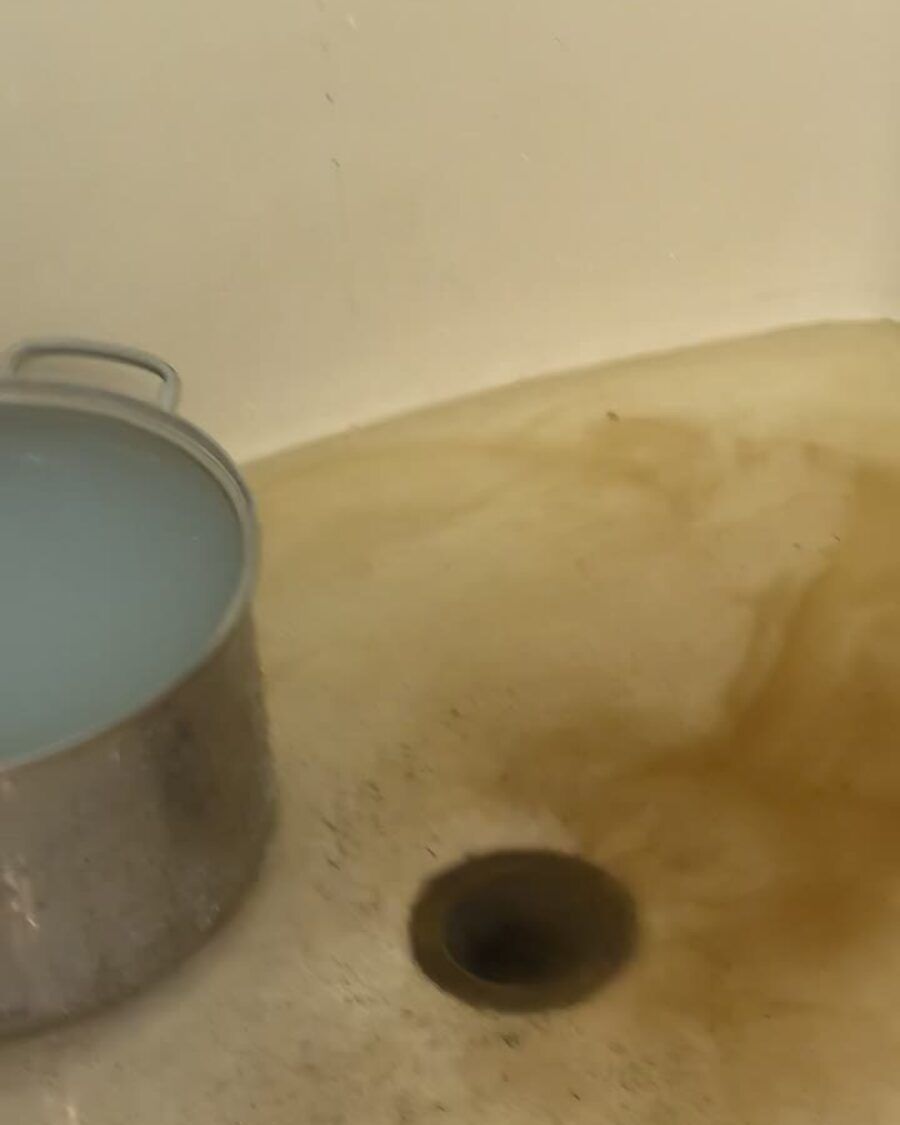
Rust-colored water coming from your hot tap is a sign that the inside of your tank is corroding. Steel water heater tanks are protected from rust by a component called an anode rod, a sacrificial metal rod designed to corrode so the tank doesn't. When the anode rod is depleted and not replaced, the tank itself starts to rust.
A few things to check before concluding the tank is the source: run the cold tap and see if the discoloration appears there too. If it does, the issue may be in your supply lines or service connection rather than the heater. If the rusty water is only on the hot side, the tank is almost certainly the problem.
Rust inside a water heater tank is not a repairable issue. A corroding tank needs to be replaced before it fails and leaks, because a leaking tank won't give you a second warning.
You Notice Moisture or Pooling Around the Base
Small amounts of condensation around a water heater are normal under certain conditions. Actual moisture pooling at the base of the tank is not.
A leak at the base usually means one of two things: a failing pressure relief valve (the safety valve on the side of the tank) or a crack in the tank itself. A faulty pressure relief valve is a repairable component. A crack in the tank is not. If the tank itself is leaking, it's failed and needs to come out immediately.
Don't wait on this one. A tank that's actively leaking can fail completely with very little additional warning and release 40 to 80 gallons of water into your home.
Your Energy Bills Have Crept Up Without Explanation
A water heater that's struggling with sediment buildup, a failing heating element, or a degrading thermostat uses more energy to produce the same amount of hot water. If your utility bills have gone up and you haven't changed your habits or added any new appliances, your water heater is a reasonable place to look.
This symptom is subtle and easy to miss, especially when energy rates change seasonally. But a water heater operating at reduced efficiency due to scale or age can add a meaningful amount to your monthly bill.
The Water Temperature Is Inconsistent
You set the thermostat and it used to be reliable. Now the water runs hot, then not quite hot enough, then scalding. Temperature inconsistency usually points to a failing thermostat or a degrading heating element. Both are repairable on a tank heater, as long as the tank itself is still in good shape.
If the inconsistency coincides with other symptoms on this list, it's more likely that the whole system is degrading together rather than a single component failure.
What to Do If You're Seeing These Signs
Call a plumber before the heater fails, not after. Emergency replacements are more stressful, take longer to schedule, and leave you without hot water in the meantime. A plumber can assess what you have, tell you whether a repair makes sense or whether replacement is the smarter move, and give you a clear number before any work starts.
At Rare Breed Plumbing, Heating, and Air, we see water heaters at every stage of their life cycle across Salt Lake and Utah County homes. We'll give you a straight answer on whether yours has life left in it or whether it's time to replace. Call 385-449-0144 or
book an appointment and we'll take a look.
If replacement is the right call, we can walk you through your options for tank and tankless water heaters and help you choose what makes sense for your home and budget.
Water Heater FAQs
How long should a water heater last in Utah?
Most tank water heaters last 8 to 12 years. With our hard water, plan on the shorter end unless you flush the tank and replace the anode rod on schedule. Past 12 years you are on borrowed time.
What does it mean when my water heater rumbles or pops?
That is sediment. Hard water minerals harden on the bottom of the tank, water gets trapped underneath, and it pops as it percolates through when the burner fires. A loud tank is working harder than it should and wearing out faster.
Is rusty water always the water heater?
Not always. Run the cold tap first. If the discoloration shows up cold too, the problem is likely your supply lines. If it is only on the hot side, the tank is corroding inside, and that is not repairable.
My water heater is leaking. Can it be fixed?
Depends where the water is coming from. A failing pressure relief valve is a repairable part. A crack in the tank itself is not, and a leaking tank can let go completely with almost no additional warning.
What is an anode rod?
A sacrificial metal rod inside the tank that corrodes so the steel tank does not. Replace it about every three years and you can add years to the heater's life. Once it is gone, the tank starts eating itself.